








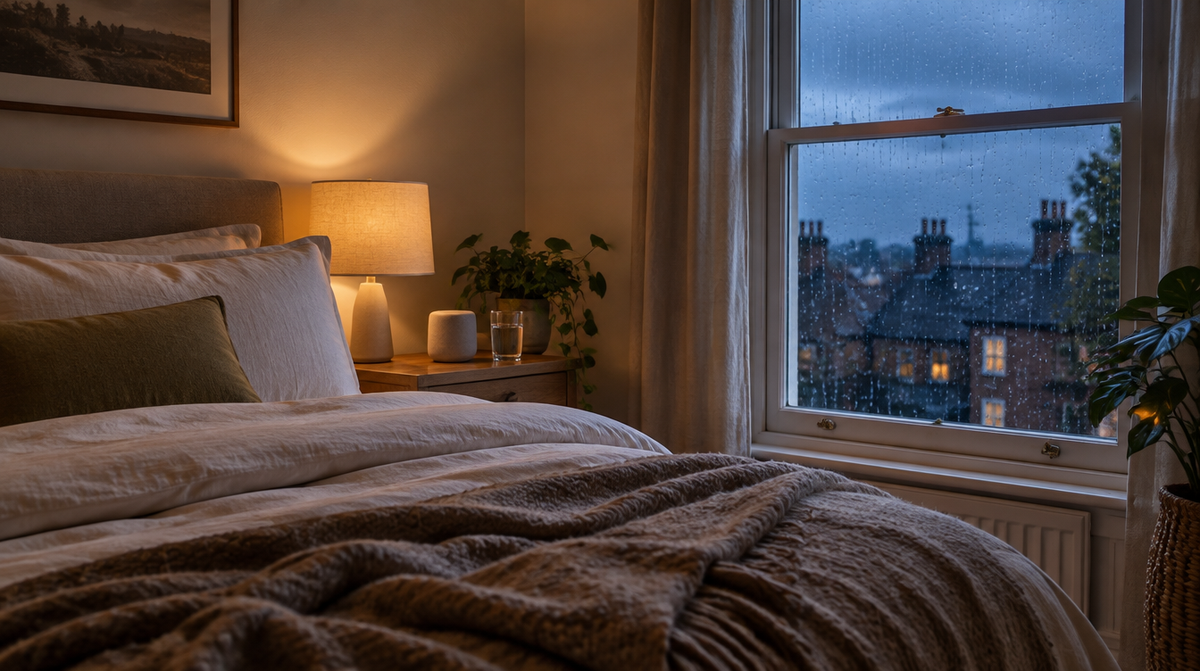
Brown noise is a deep, steady background sound with more energy in the low frequencies than white noise, so it sounds like a low rumble: heavy rain, a distant waterfall or the hum inside a train carriage. Many people play it at bedtime to mask noisy neighbours, traffic or a snoring partner. Research on "coloured noise" and sleep is still limited, but used sensibly it may be a simple, low-cost addition to your wind-down routine.
Below, we explain what brown noise actually is, how it compares with white and pink noise, what the research does and doesn't say, and how to use it safely.
What is brown noise?
"Coloured noise" is a way of describing how a sound's energy is spread across the frequencies we can hear. Brown noise (sometimes called Brownian or red noise) gets its name from Brownian motion, the random movement of particles, rather than from the colour. Its energy drops steadily as the pitch rises, so the low, bassy end dominates and the hiss you hear in white noise is softened away.
The result is a sound many people describe as warmer, rounder or less "sharp" than white noise. Common real-world comparisons include:
- Steady heavy rainfall or a strong shower
- Rolling surf or a river heard from a distance
- The low rumble of an aeroplane cabin or train
- Wind blowing steadily outside
Brown noise vs white noise vs pink noise
All three are continuous, unchanging sounds. The difference is the balance between low and high frequencies.
White noise
White noise has equal energy across all frequencies. To our ears that sounds bright and hissy, like an untuned radio or a fan on full. Because it covers the whole range, it is good at masking a wide variety of sounds, but some people find it harsh after a while.
Pink noise
Pink noise reduces the higher frequencies a little, giving a more balanced sound that is often likened to steady rain or rustling leaves. It is the type most often used in sleep studies.
Brown noise
Brown noise reduces the high frequencies even more, leaving a deep rumble. It can be particularly good at covering low-pitched sounds such as traffic, a boiler or footsteps upstairs, and many people simply find it more soothing to listen to for hours.
There is no single "best" colour. The right one is largely a matter of personal preference and the type of noise you are trying to cover.
Is brown noise good for sleep? What the research says
It is worth being honest here: the evidence is thinner than social media might suggest.
- A 2021 systematic review in Sleep Medicine Reviews looked at studies of continuous noise (mostly white and pink noise) as a sleep aid and found the overall quality of evidence was very low. The authors called for better research before firm conclusions can be drawn (Riedy et al., 2021).
- Some small laboratory studies have explored short bursts of pink noise timed to deep-sleep brain waves, which is quite different from leaving a track playing all night (Papalambros et al., 2017).
- We are not aware of robust studies that look at brown noise specifically.
So why do so many people like it? The most common explanation is simple sound masking. Sudden noises, such as a car door or a dog barking, stand out against silence. A steady background sound makes those changes less noticeable, which may help some people drift off without being jolted by every small sound. Others just find a constant, predictable sound relaxing, a bit like listening to rain.
How to use brown noise for sleep
If you would like to try it, these tips can help you get the most from it while protecting your hearing.
- Keep the volume low. Aim for a level that softens background noise rather than drowns it out, roughly as loud as a quiet conversation or lower. Research on infant sleep machines found some could exceed recommended noise limits at maximum volume when placed close to the cot (Hugh et al., 2014), which is a useful reminder for adults too.
- Put the speaker across the room. Placing it a little distance from your bed, rather than right by your head, keeps the sound gentle.
- Be careful with headphones. If you use headphones or earbuds, keep the volume modest and consider sleep headphones designed for comfort. The NHS offers practical advice on protecting your hearing.
- Use a timer if you prefer. Some people like noise all night; others only need it while they fall asleep. Try both and see what feels better.
- Give it a few nights. A new sound can feel odd at first. Try it for a week before deciding whether it suits you.
- Pair it with good sleep habits. Brown noise works best alongside the basics: a regular bedtime, a dark and cool bedroom, less screen time before bed and going easy on caffeine later in the day. The NHS has a helpful guide to falling asleep faster and sleeping better.
Building a calmer wind-down routine
Brown noise is just one piece of the puzzle. A consistent routine in the hour before bed tells your body that the day is winding down. That might include dimming the lights, a warm shower, reading a few pages of a book and setting your phone aside.
Some people also like to add a wellness patch to that routine. Our Sleep Dream Patches are designed to be applied as part of your evening wind-down and contain valerian root, L-theanine, magnesium glycinate and melatonin. If busy evenings leave your mind racing, you might also like to browse our Stress Relief Patches. Patches aren't a replacement for a healthy routine, but some people find them a convenient extra step to stick with.
You can explore the full range in our Health collection or see all our patches in one place.
Brown noise FAQs
Is brown noise better than white noise for sleep?
Not necessarily. There is no strong evidence that one colour of noise is better than another. Brown noise is deeper and softer, so many people find it more pleasant for long listening, while white noise may cover a wider range of sounds. Try both at a low volume and see which you prefer.
Is it safe to sleep with brown noise on all night?
For most adults, a low-volume background sound is unlikely to cause problems. The main thing to watch is volume, especially with headphones or a speaker placed close to your head. If you notice ringing in your ears or any change in your hearing, stop using it and speak to your GP.
Can brown noise help with focus as well as sleep?
Some people use brown noise while working or studying to mask office chatter and other distractions. Experiences vary, and research on this is limited, so treat it as something to experiment with rather than a guaranteed fix.
Where can I find brown noise?
Brown noise tracks are widely available on music and podcast streaming services, video platforms and sleep apps. Many smart speakers and dedicated sound machines also include a brown noise setting.
The bottom line
Brown noise is a deep, rumbling sound that many people find calming at bedtime, mainly because it helps mask disruptive background noise. The research is still at an early stage, so it is best seen as a simple, low-risk experiment rather than a sleep solution. Keep the volume low, pair it with a consistent wind-down routine and see how you feel.
Please note: if you are pregnant, breastfeeding, taking any medication or managing a health condition, speak to your GP or pharmacist before trying a new wellness product. If poor sleep is ongoing or affecting your daily life, it is a good idea to talk to your GP.