








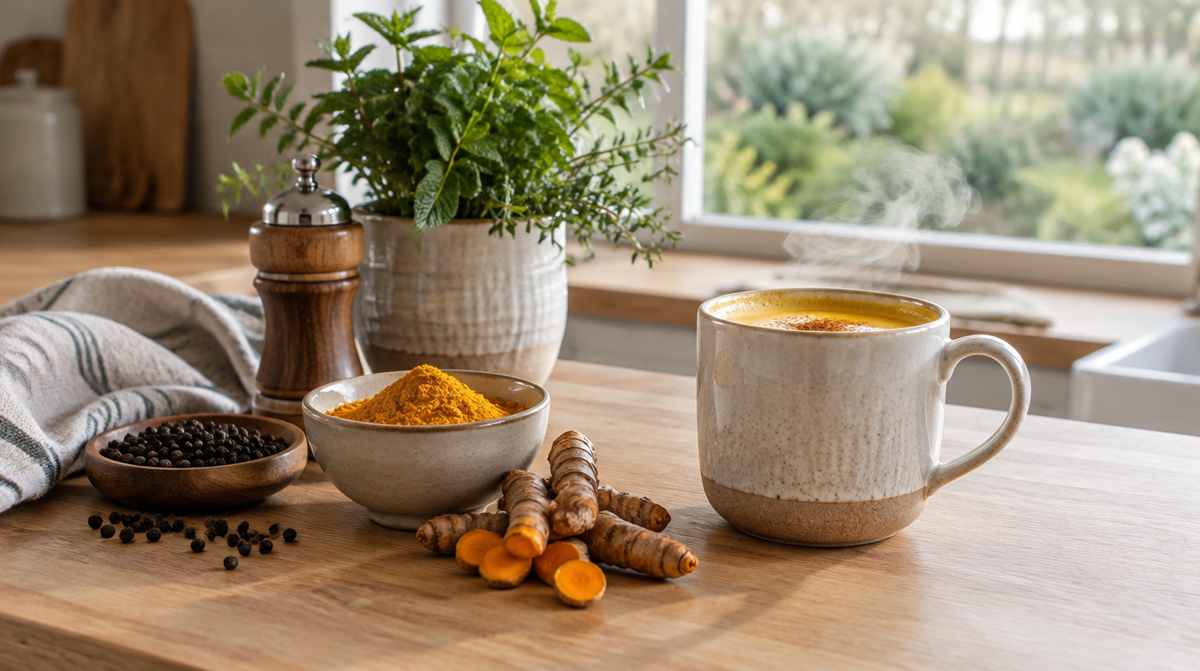
Turmeric and black pepper are paired because of one practical problem: curcumin, the compound in turmeric that researchers are most interested in, isn't absorbed very well on its own. Piperine, the compound that gives black pepper its bite, appears to slow the way your body breaks curcumin down, so more of it reaches your bloodstream. That's the short answer. Below, we explain what the research actually shows, easy ways to use the pair in your kitchen, and who should check with a professional before taking turmeric supplements.
What's in turmeric and black pepper?
Turmeric and curcumin
Turmeric is the bright yellow root of the Curcuma longa plant, a relative of ginger. It's been used in South Asian cooking for centuries and is now a familiar sight in UK supermarkets, coffee shops and supplement aisles. Its colour comes mainly from a group of compounds called curcuminoids, the best known of which is curcumin. Curcumin makes up only a small proportion of turmeric by weight, which is why supplements often use concentrated extracts rather than plain powder (Hewlings and Kalman, 2017).
Black pepper and piperine
Black pepper comes from the dried berries of the Piper nigrum vine. Its main active compound, piperine, is responsible for the warm, sharp flavour. Piperine is also the reason black pepper keeps turning up in turmeric products and recipes.
Why are turmeric and black pepper taken together?
Curcumin on its own has what scientists call low bioavailability. In plain English, that means relatively little of what you swallow ends up circulating in your body. It doesn't dissolve well in water, it isn't absorbed easily from the gut, and what is absorbed is processed quickly by the liver and gut wall and cleared from the body (Anand et al., 2007).
This is where black pepper comes in. In a frequently cited 1998 study, researchers gave a small group of healthy volunteers 2g of curcumin, either alone or with 20mg of piperine. When piperine was added, the amount of curcumin measured in the blood was far higher, with the researchers reporting an increase in bioavailability of 2,000% (Shoba et al., 1998). The researchers suggested piperine works by slowing one of the processes the body uses to break curcumin down.
It's worth keeping that headline figure in perspective:
- It was a small, short study in healthy adults, carried out more than 25 years ago.
- It used concentrated curcumin and a measured dose of piperine extract, not a sprinkle of turmeric and a twist of the pepper mill.
- Higher levels in the blood tell us about absorption. On their own, they don't tell us anything about specific health outcomes.
So the pairing makes sense from an absorption point of view, but it isn't a shortcut to any particular result.
Does fat matter too?
Curcumin dissolves much better in fat than in water. That's one reason turmeric is traditionally cooked with oil, ghee or coconut milk, and why many recipes combine turmeric, black pepper and a source of fat. Research reviews describe this low water solubility as one of the main reasons curcumin is hard to absorb (Hewlings and Kalman, 2017). If you're cooking with turmeric, adding a little oil and a pinch of pepper is an easy habit to get into.
Easy ways to use turmeric and black pepper at home
You don't need supplements to enjoy turmeric. Here are a few simple ways to add it to everyday meals:
- Golden milk: warm your milk of choice with half a teaspoon of turmeric, a pinch of black pepper, cinnamon and a little honey. It's a cosy, caffeine-free drink for autumn evenings.
- Curries, dals and soups: fry turmeric in oil with onion, garlic and black pepper before adding the other ingredients.
- Roast vegetables: toss cauliflower, squash or sweet potato with olive oil, turmeric, black pepper and a pinch of salt.
- Eggs: a little turmeric and cracked pepper in scrambled eggs or an omelette adds colour without overpowering them.
- Rice: stir turmeric and a knob of butter into rice as it cooks for a golden side dish.
One practical tip: turmeric stains. Wipe worktops quickly and keep it away from pale wooden spoons if you'd rather they stayed pale.
Turmeric and black pepper supplements: what to know first
Turmeric in normal food amounts is widely eaten and enjoyed. Concentrated supplements are different, because they can provide far more curcumin than you'd get from cooking. The US National Center for Complementary and Integrative Health notes that turmeric supplements have been linked to rare reports of liver problems, that they may interact with some medicines, and that amounts above those found in food may not be suitable during pregnancy (NCCIH). Because piperine affects how the body processes some substances, it may also change how certain medicines are handled.
If you're thinking about a turmeric supplement:
- Read the label and don't take more than the recommended amount.
- Avoid doubling up on several products that all contain turmeric or curcumin.
- Speak to a pharmacist or GP first if you take any regular medication, especially blood thinners, or if you have a liver or gallbladder condition.
- Stop and seek advice if you notice anything unusual.
Where our Stress Relief Patches fit in
Some people like turmeric in their cooking but prefer not to add another tablet to their day. Our Stress Relief Patches are designed with curcumin and black cohosh, and are intended as a simple, once-a-day addition to a calm routine. They aren't a replacement for a varied diet, regular movement, good sleep or support when life feels overwhelming. Think of them as one small part of a wider routine, not the whole answer.
Black cohosh isn't suitable for everyone, so please read the full product information before you start. If evenings are when you find it hardest to switch off, you might also like to browse our Sleep Dream Patches, or see the full range in our health patches collection.
Turmeric and black pepper: FAQs
How much black pepper should I add to turmeric?
There's no official guideline for cooking. A pinch or a couple of twists of the pepper mill per serving is a common approach. The 1998 study used a measured 20mg dose of piperine extract, which isn't directly comparable to kitchen amounts. For supplements, follow the label.
Can I have turmeric and black pepper every day?
Using both in everyday cooking is normal for millions of people. For concentrated supplements, stick to the recommended amount and check with a pharmacist if you take medication or are unsure whether a product is right for you.
Is fresh turmeric better than ground turmeric?
Both contain curcumin, and the amount varies between batches and products. Fresh root has a brighter, more peppery flavour, while ground turmeric is more convenient. The best choice is the one you'll actually use.
Will turmeric and black pepper help me feel less stressed?
Research into curcumin and mood is still at an early stage, and turmeric isn't a substitute for proven ways to look after your wellbeing. The NHS Every Mind Matters guide to stress has practical, evidence-based tips. If stress is affecting your daily life, speak to your GP.
The bottom line
Turmeric and black pepper make a sensible pairing because piperine appears to help more curcumin reach your bloodstream, and adding a little fat may help too. Enjoy them in your cooking, keep expectations realistic, and treat supplements with the same care as any other product. If you'd like to explore a simpler routine, you can browse all our wellness patches.
Please note: this article is for general information only and isn't medical advice. If you're pregnant, breastfeeding, taking any medication or managing a health condition, speak to your GP or pharmacist before trying a new supplement or wellness patch.