








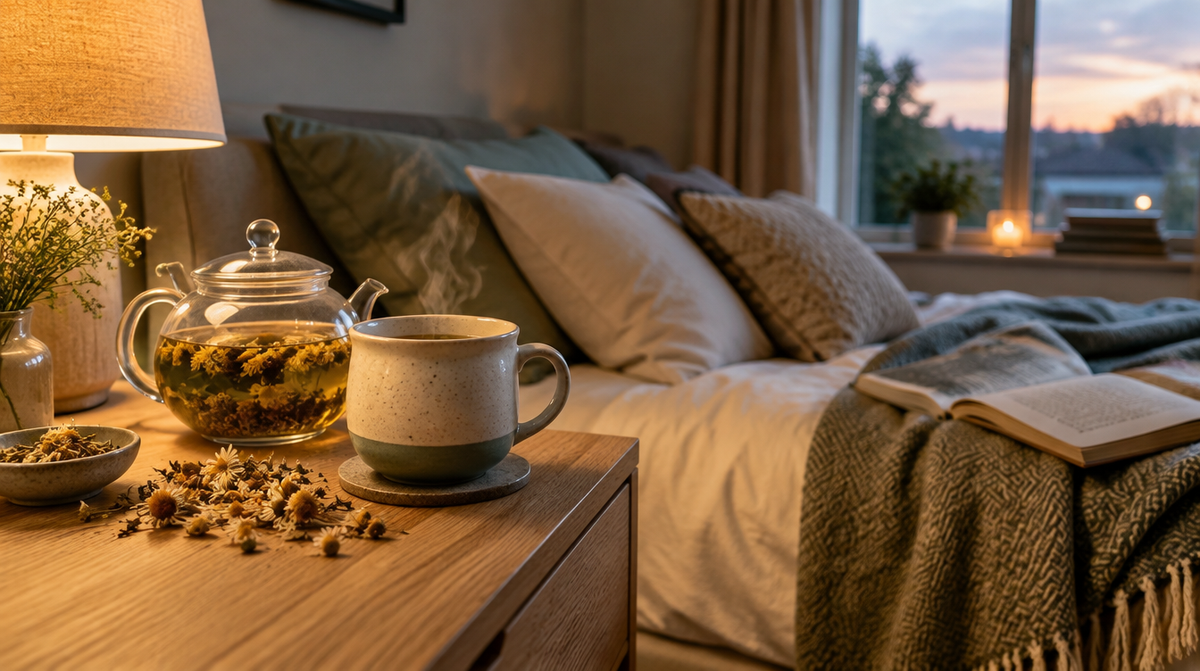
Sleep tea is a caffeine-free herbal infusion, usually made with plants such as chamomile, lavender, valerian root, passionflower or lemon balm, that people drink as part of a winding-down routine. The research on individual herbs is mixed and mostly small-scale, so a cup of sleep tea is best thought of as a soothing evening ritual rather than a sure-fire fix. Below, we look at the most popular ingredients, what the evidence does and doesn't say, and how to make a bedtime cup work for you.
What is sleep tea?
"Sleep tea", "night-time tea" and "bedtime tea" are all names for herbal blends designed to be drunk in the evening. Unlike black, green or everyday builder's tea, they aren't made from the tea plant (Camellia sinensis), so a pure herbal blend is naturally caffeine-free. You'll find them in most UK supermarkets, usually as a mix of two to five herbs with flavours such as vanilla, apple or honeybush.
Part of the appeal is simple. A warm, caffeine-free drink gives you a reason to pause, sit down and signal that the day is ending. The NHS suggests cutting down on caffeine and building a relaxing routine before bed, and swapping an evening coffee or regular cuppa for a herbal one fits neatly with both.
Popular sleep tea ingredients and what the research says
Chamomile
Chamomile is the classic bedtime herb, with a mild, slightly sweet, apple-like flavour. It contains a plant compound called apigenin, which researchers have studied for how it interacts with receptors in the brain associated with relaxation. Studies looking at chamomile and sleep are generally small and their results vary, and the US National Center for Complementary and Integrative Health (NCCIH) notes that the evidence is limited. Chamomile belongs to the daisy family, so people who are allergic to related plants, such as ragweed, chrysanthemums or marigolds, may react to it.
Lavender
Lavender is used more often as a scent than a drink, but it appears in plenty of night-time blends for its floral flavour and aroma. According to NCCIH, research on lavender for sleep and calm is limited, and much of it has looked at aromatherapy or capsules rather than tea. A little goes a long way in the cup, so blends usually pair it with softer herbs like chamomile.
Valerian root
Valerian has a long history as a traditional herbal remedy and is one of the most studied herbs in the sleep space. Even so, NCCIH describes the evidence on whether it helps with sleep as inconsistent. It has an earthy, some would say pungent, taste, which is why you'll rarely find it on its own in a tea bag. It's usually blended with mellower ingredients such as chamomile, lemon balm or peppermint.
Passionflower
Passionflower is a climbing plant whose leaves and flowers are used in some evening blends. It has been studied for calm and sleep, but NCCIH says there isn't enough research to draw firm conclusions. It has a light, grassy flavour that works well with fruit or floral notes.
Rooibos, lemon balm and other gentle bases
Rooibos (redbush) is naturally caffeine-free and often forms the base of evening blends, along with honeybush, lemon balm, apple or peppermint. These are mainly there for flavour rather than because of any particular sleep research. Rooibos is a handy swap if you love a milky brew but want to skip caffeine later in the day.
Does sleep tea actually work?
It depends what you mean by "work". There's no good evidence that any herbal tea will reliably send you to sleep, and the research on individual herbs is mostly small, short and mixed. Many studies also use concentrated extracts or capsules rather than a tea bag, so their results don't necessarily translate to your evening cup, and the amount of each herb varies from brand to brand.
What a sleep tea can do is give you a consistent, calming cue. The NHS advice on getting to sleep focuses on habits such as keeping regular sleep times, winding down before bed and making your bedroom dark, quiet and comfortable. A warm, caffeine-free drink can slot easily into that kind of routine, especially if it replaces a late coffee, cola or regular tea.
How to make sleep tea part of your bedtime routine
- Time it sensibly. Having your cup an hour or so before bed, rather than right as you turn the light off, gives you time to visit the loo so you're less likely to be woken up by a full bladder.
- Check the label for caffeine. Some "calming" or "wellness" blends include green tea, matcha, yerba mate or black tea, all of which contain caffeine. Look for blends described as 100% herbal or caffeine-free.
- Brew it properly. Herbal teas usually need freshly boiled water and a longer steep than regular tea, often around five minutes. Follow the instructions on the pack and cover your mug while it brews to keep the aroma in.
- Make it a screen-free moment. Sip your tea while reading, stretching, running a bath or jotting down tomorrow's to-do list, rather than scrolling.
- Keep it consistent. A routine that you repeat most nights tends to become a stronger "time to wind down" signal than something you try once in a while.
Sleep tea, supplements or patches: finding what suits you
Some people love their evening cup. Others would rather not drink much before bed, don't enjoy the taste of herbal blends, or simply want something they can apply and forget about. If that sounds like you, our Sleep Dream Patches are designed to fit into an evening wind-down routine. Each patch contains ingredients including valerian root, L-theanine and magnesium glycinate, and you simply apply one to clean, dry skin as part of your bedtime routine.
If your evenings feel more "tired but wired" because the day's worries are still running, you might also like to look at our Stress Relief Patches, which are designed to support a calmer daily routine. You can compare everything in our health and wellbeing patches, or browse the full patch range. Whichever you choose, patches and teas work best alongside the basics: a regular bedtime, a darker, quieter bedroom and less screen time late at night.
Sleep tea FAQs
What is the best tea for sleep?
There's no single best tea for sleep. Chamomile is the most popular choice and a good place to start because it's gentle and widely available. Beyond that, the best sleep tea is a caffeine-free blend you enjoy enough to drink regularly, because the routine itself is a big part of the appeal.
How long before bed should I drink sleep tea?
Many people find that around an hour before bed works well. It gives the drink time to become part of your wind-down rather than the last thing you do, and it reduces the chance of needing the loo in the night.
Is it OK to drink sleep tea every night?
For most healthy adults, a cup of caffeine-free herbal tea in the evening is a normal part of a varied diet. However, some herbs can interact with medicines or aren't suitable for everyone. For example, NCCIH notes that chamomile may interact with certain medicines. If you take regular medication, check with your pharmacist before making a herbal blend a nightly habit.
Can I drink sleep tea when pregnant?
The NHS notes that there's limited information on the safety of herbal teas during pregnancy, so it's sensible to check with your midwife, GP or pharmacist before drinking sleep tea, particularly blends that contain valerian or other stronger herbs.
A quick note before you try anything new
This article is for general information and isn't a substitute for medical advice. If you're pregnant, breastfeeding, taking medication or managing a health condition, speak to your GP or pharmacist before trying herbal teas, supplements or wellness patches. And if you've been struggling to sleep for a long time, or it's affecting your daily life, it's worth booking an appointment with your GP.