





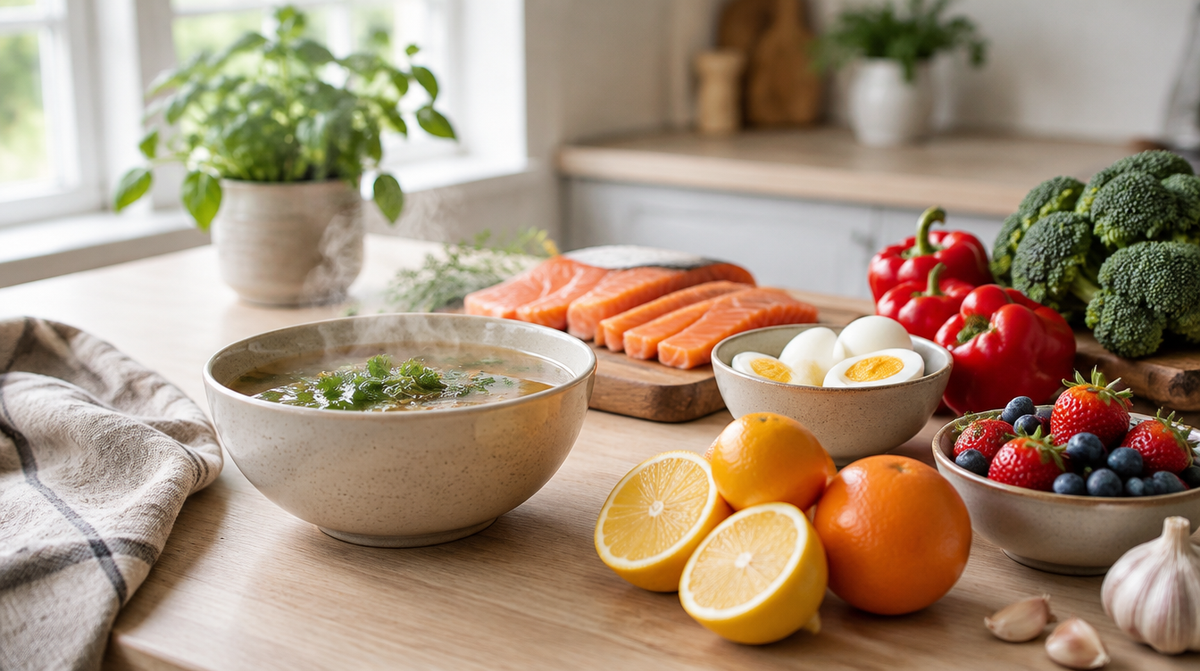
Looking for collagen rich foods? The short answer: collagen itself is found only in animal foods – mainly bone broth, slow-cooked cuts of meat with connective tissue, skin-on chicken and fish, and gelatine. But that's only half the story. Your body makes its own collagen from the protein you eat, with help from nutrients such as vitamin C, zinc and copper. So a "collagen-friendly" plate is really about two things: foods that contain collagen, and foods that give your body the raw materials to make it.
Below, we've rounded up the most useful foods in both groups, with simple ways to work them into a normal UK week – no expensive superfoods required.
What is collagen, and why does food matter?
Collagen is the most abundant protein in the body. It's a key structural part of skin, tendons, ligaments, bones and cartilage – think of it as part of the scaffolding that holds things together. According to Harvard's Nutrition Source, the body builds collagen from amino acids (particularly glycine, proline and hydroxyproline), and natural production gradually slows as we get older.
When you eat collagen, your digestive system breaks it down into amino acids and small peptides rather than delivering it straight to your skin. That's why overall diet matters: eating enough protein and getting a good range of vitamins and minerals gives your body what it needs to keep up its own normal collagen production.
Foods that naturally contain collagen
Collagen sits in the connective tissue, skin and bones of animals, so these are the foods to look for.
1. Bone broth
Made by simmering bones (chicken, beef or fish) for several hours, bone broth draws collagen out of the bones and connective tissue – which is why a good homemade broth sets like jelly once it's chilled. The amount of collagen varies a lot from batch to batch, so think of it as a nourishing base for soups, stews and risottos rather than a measured dose.
2. Slow-cooked, tougher cuts of meat
Cuts with lots of connective tissue – beef brisket, shin, chuck, oxtail, lamb shoulder and pork shoulder – are naturally rich in collagen. Long, slow cooking turns that collagen into gelatine, which is what gives a stew its silky texture. A slow cooker or a low oven on a Sunday afternoon does the work for you.
3. Skin-on chicken
Chicken skin, wings and thighs contain more connective tissue than skinless breast. Roasting a whole chicken and then using the carcass for stock is a thrifty way to get more from one bird.
4. Fish with the skin on, and small bony fish
Fish skin contains collagen, and tinned sardines or pilchards (eaten with their soft bones) are an affordable option. The NHS recommends at least two portions of fish a week, including one of oily fish such as salmon, mackerel or sardines – so leaving the skin on is an easy win.
5. Gelatine
Gelatine is simply cooked collagen. It's used in jellies, panna cotta and some sweets – but those often come with plenty of sugar, so they're best kept as an occasional treat rather than a collagen strategy.
Foods that support your body's own collagen production
There are no plant foods that contain collagen, but plenty of foods – plant and animal – provide the building blocks and nutrients involved in making it. This is great news for vegetarians and vegans too.
6. Protein-rich foods: eggs, dairy, beans and lentils
Your body can't make collagen without amino acids, and those come from protein. Eggs, Greek yoghurt, milk, tofu, beans, chickpeas and lentils all count. Aim to include a source of protein at each meal, in line with the NHS Eatwell Guide.
7. Vitamin C foods: citrus, peppers, berries and kiwi
Vitamin C is the nutrient most closely linked to collagen. In the UK, the approved nutrition claim is that vitamin C contributes to normal collagen formation for the normal function of skin, blood vessels, bones, cartilage and gums. A 2017 review in the journal Nutrients explains how vitamin C acts as a co-factor for the enzymes that stabilise collagen's structure.
The NHS says adults aged 19 to 64 need 40mg of vitamin C a day, and most people can get this from a varied diet. Good sources include oranges, red and yellow peppers, strawberries, blackcurrants, kiwi, broccoli, Brussels sprouts and potatoes. Because the body doesn't store vitamin C, it's worth eating some every day. (We've covered this pairing in more depth in Vitamin C + Collagen: Why You Need Both.)
8. Zinc foods: shellfish, meat, seeds and wholegrains
Zinc is involved in making new cells and supports the normal maintenance of skin. The NHS lists meat, shellfish, dairy, bread and cereal products such as wheatgerm as good sources, and says men need about 9.5mg a day and women about 7mg. Pumpkin seeds, cashews and chickpeas are handy plant-based options.
9. Copper foods: nuts, shellfish and offal
Copper also plays a role in the enzymes involved in forming connective tissue. According to the NHS, good sources include nuts, shellfish and offal, and most people get enough from their diet.
A simple collagen-friendly day of eating
You don't need to overhaul your diet. Here's how a few of these foods might fit into an ordinary day:
- Breakfast: Greek yoghurt with strawberries, kiwi and a sprinkle of pumpkin seeds.
- Lunch: Sardines on wholemeal toast with a side of cherry tomatoes and peppers.
- Snack: An orange and a small handful of cashews.
- Dinner: Slow-cooked beef and bean stew made with homemade bone broth, served with broccoli.
Lifestyle habits that matter too
Food is one piece of the picture. Harvard's Nutrition Source notes that sun exposure and smoking can damage collagen, so wearing sunscreen, not smoking and getting enough sleep are all part of looking after your skin. Staying hydrated and keeping alcohol within the UK's low-risk guidelines helps too.
If you like the idea of an easy extra step alongside a balanced diet, our Collagen Plus Patches are designed to slot into a busy beauty routine – one patch, no powders to mix. They're not a substitute for a varied diet, but some people find a simple daily ritual helps them stay consistent. You can see them alongside the rest of our beauty patches, or browse all our wellness patches.
Collagen rich foods: FAQs
Which food has the most collagen?
Foods made from animal connective tissue, skin and bones – such as bone broth, gelatine, oxtail, beef shin and chicken skin – are the richest sources. Exact amounts vary widely depending on the cut and how it's cooked, so there isn't a reliable "number one" figure.
Are there vegan collagen rich foods?
No – collagen is only found in animals. However, vegans can support their body's own collagen production by eating plenty of plant protein (beans, lentils, tofu, nuts and seeds) alongside vitamin C-rich fruit and vegetables and zinc sources such as pumpkin seeds and wholegrains.
Does eating collagen go straight to your skin?
Not directly. Like other proteins, collagen is broken down during digestion into amino acids and peptides, which the body then uses wherever it needs them. That's why a varied, protein-rich diet with enough vitamin C matters more than any single food.
Should I take a collagen supplement as well as eating these foods?
Most people can get the nutrients involved in collagen production from a balanced diet. Supplements are a personal choice; if you're considering one, check the label carefully and speak to a pharmacist if you're unsure whether it's right for you.
Please note: this article is for general information only and isn't medical advice. If you're pregnant, breastfeeding, taking medication or managing a health condition, speak to your GP or pharmacist before making changes to your diet or adding a new wellness product.