








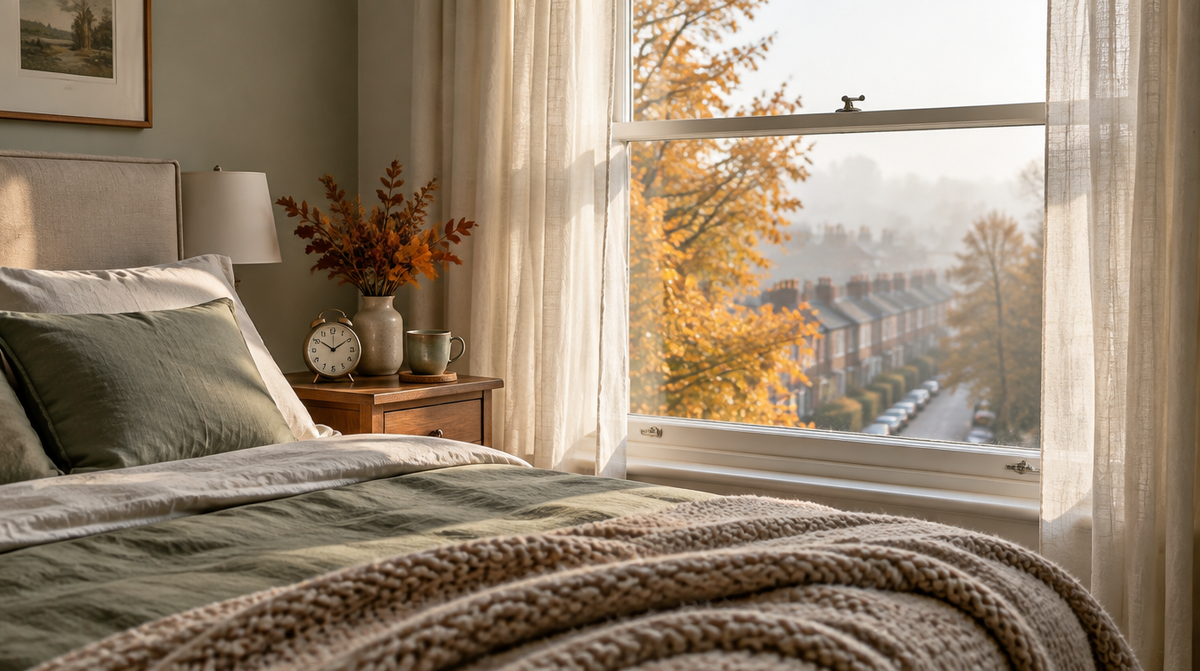
Yes, when the clocks go back you technically get an extra hour in bed. In the UK, clocks go back one hour at 2am on Sunday 25 October 2026, so 2am becomes 1am. But plenty of people find the "extra hour" doesn't feel like more sleep at all. Your body clock runs on light and routine, not on the time shown on your phone, so it can take a few days to catch up. Here's what actually happens, and some simple ways to make the switch feel smoother.
When do the clocks go back in 2026?
UK clocks go back on the last Sunday of October, which this year is Sunday 25 October 2026. At 2am British Summer Time (BST), clocks move back to 1am Greenwich Mean Time (GMT). Most phones and laptops update automatically, but ovens, car clocks and older alarm clocks usually need changing by hand. You can check the dates on the official GOV.UK clock change page.
Do you really get more sleep when the clocks go back?
On paper, yes: the night of the change is 25 hours long. In practice, it depends on what you do with that hour. Many of us stay up later on the Saturday night "because we can", or wake at our usual body-clock time and lie there waiting for the alarm. Researchers have pointed out that even a one-hour shift can unsettle sleep for several days, as Harvard Health explains.
The autumn change is generally thought to be easier than the spring one, when we lose an hour. Even so, people with a fixed wake-up time, such as parents of young children, dog owners and early-shift workers, often notice that their mornings simply start an hour "earlier" for a while.
Why the clock change can leave you feeling off
Your body clock follows light
Your internal body clock, or circadian rhythm, is set mainly by light. Morning light helps signal "daytime", and darkness in the evening helps your body get ready for sleep, partly through the natural release of the hormone melatonin. When the clocks go back, mornings become brighter for a short while but evenings get dark much earlier. That can leave you feeling sleepy by early evening and wide awake at 5am. The Sleep Foundation's guide to daylight saving time covers this in more detail.
Meals, caffeine and routine shift too
It isn't only bedtime that moves. Lunch, dinner, your afternoon coffee and your evening screen time all shift by an hour on the clock, and your body notices. If dinner suddenly lands at what feels like 8pm, or that 3pm coffee now sits closer to bedtime, sleep can feel a bit lighter for a few nights.
Darker afternoons can affect energy
Once it's dark by about 5pm, many people feel less energetic in the late afternoon. That's a common, normal part of the seasons changing for lots of us. If low mood or tiredness lasts for weeks, though, it's worth talking to your GP. The NHS has helpful information on seasonal affective disorder (SAD).
How to adjust to the clocks going back: 7 simple tips
- Shift gradually. For three or four nights before 25 October, go to bed and get up around 15 minutes later than usual. By Sunday, your body will already be partway there.
- Get daylight early. Open the curtains as soon as you're up, and try to get outside for a walk in the morning. Natural light is one of the strongest signals for your body clock.
- Keep your wake-up time steady. A consistent wake-up time, even at weekends, is one of the NHS's core tips for getting to sleep.
- Move meals with the clock. Eat at your usual clock times from Sunday onwards, so your daily rhythm has a clear anchor.
- Watch the caffeine. Keep coffee and tea to the morning and early afternoon, particularly in the first week after the change.
- Wind down in dim light. In the hour before bed, lower the lights, put your phone down and choose something calming, such as reading, a warm shower or gentle stretching.
- Make your bedroom sleep-friendly. Cool, dark and quiet is the aim. Blackout curtains or an eye mask can help if the lighter mornings wake you too early.
Building a calmer autumn routine
The clocks going back is a good moment to reset your evenings for the darker months. Small, repeatable habits tend to work better than big changes: the same wind-down order each night, a set "screens off" time and a regular bedtime.
Some people like to add a wellness patch to that routine as a simple cue that the day is ending. Our Sleep Dream Patches are designed to fit into an evening wind-down and include ingredients such as L-theanine and magnesium (see the product page for the full ingredient list and directions). For the darker mornings, the Energy Boost Patches contain B vitamins. According to the NHS guide to B vitamins, several of them play a part in releasing energy from food. Patches are not a substitute for a varied diet, good sleep habits or medical advice, but they may help some people stay consistent with their routine.
You can browse our full range of wellness patches to see what fits your day.
Frequently asked questions
Do the clocks go back or forward in October?
Back. In the UK, clocks go back one hour on the last Sunday in October (25 October 2026) and forward one hour on the last Sunday in March.
Do you get an extra hour of sleep when the clocks go back?
You get an extra hour on the clock that night. Whether you actually sleep longer depends on your routine. If you stay up later, or your body wakes at its usual time, you may not notice any extra rest.
How long does it take to adjust to the clock change?
It varies from person to person. Many people feel back to normal within a few days to a week. Shifting your bedtime gradually beforehand and getting morning daylight can help.
Why do I feel more tired after the clocks go back?
Darker evenings, changed meal times and a slightly shifted body clock can all leave you feeling a little off for a few days. If tiredness carries on for weeks or affects daily life, speak to your GP, as the NHS advises for ongoing tiredness.
The bottom line
When the clocks go back, you gain an hour on paper, but your body clock needs a few days to catch up. Shift your routine gradually, get daylight in the morning and protect your wind-down time, and the darker months can feel a lot more manageable.
Please note: our patches are wellness products and aren't intended to diagnose, treat, cure or prevent any disease. If you're pregnant, breastfeeding, taking medication or managing a health condition, please speak to your GP or pharmacist before using them.