






Ceylon cinnamon is the "true" cinnamon, made from the inner bark of Cinnamomum verum, a tree grown mainly in Sri Lanka. It has a milder, sweeter flavour than cassia, the darker and more common type you'll often find on supermarket shelves, and it naturally contains only trace amounts of coumarin, a compound that food safety bodies recommend keeping an eye on. If you use cinnamon little and often, those differences are worth knowing. Here's a plain-English guide to telling them apart, choosing between them and using cinnamon sensibly.
What is Ceylon cinnamon?
All cinnamon comes from the inner bark of trees in the Cinnamomum family. The bark is peeled, dried and either rolled into sticks (called quills) or ground into powder. According to the US National Center for Complementary and Integrative Health (NCCIH), there are two main types you're likely to come across:
- Ceylon cinnamon (Cinnamomum verum), often called "true" cinnamon, grown mainly in Sri Lanka (formerly Ceylon, hence the name).
- Cassia cinnamon (Cinnamomum aromaticum), grown in south-east Asia and the type most widely sold.
Many jars simply say "cinnamon" without naming the type. If the label doesn't specify Ceylon or Cinnamomum verum, it's reasonable to assume it's probably cassia.
Ceylon vs cassia cinnamon: the key differences
Appearance
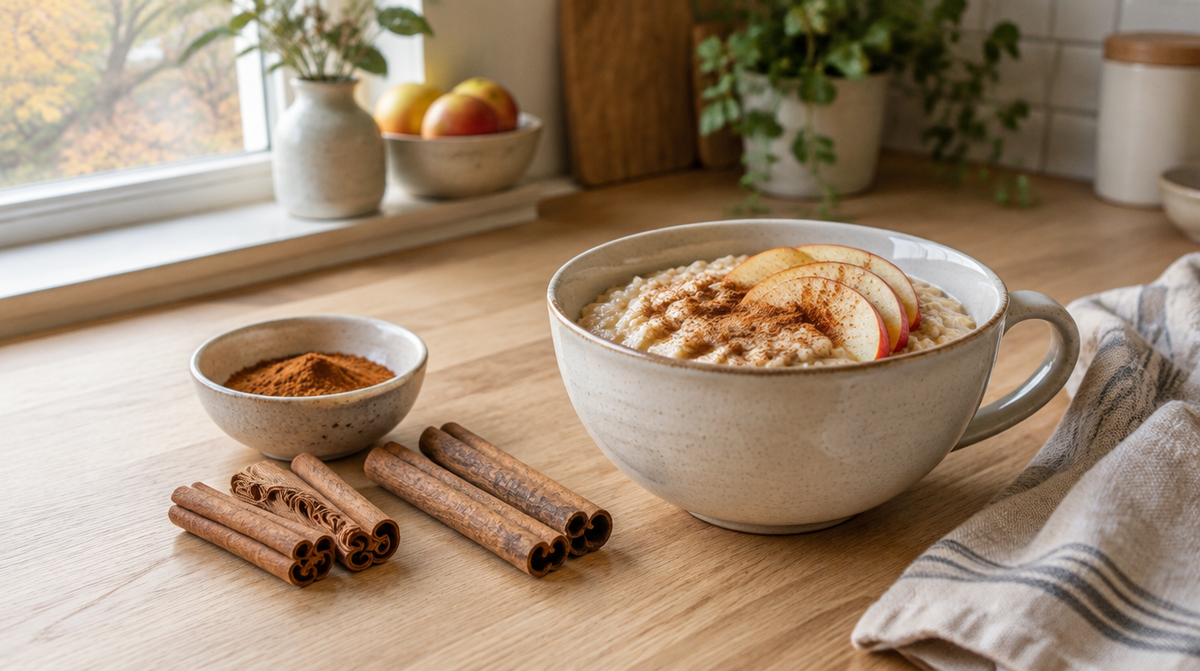
Sticks are the easiest way to tell them apart. Ceylon quills are light tan and made of many thin, papery layers rolled together, a bit like a cigar. They're fragile and crumble easily. Cassia sticks are darker and reddish-brown, with a single thick layer of bark that curls in from both edges and is hard enough to be difficult to snap.
Flavour and aroma
Ceylon has a delicate, slightly sweet flavour with gentle citrus and floral notes. Cassia is bolder, spicier and more pungent, which is the classic "cinnamon bun" flavour many people know best. Neither is better; they just suit different dishes.
Coumarin content
This is the difference most people are searching for. Coumarin is a naturally occurring flavour compound found in a number of plants. Cassia cinnamon can contain relatively high levels, while Ceylon cinnamon may contain only a trace, as the NCCIH notes.
The European Food Safety Authority (EFSA) has set a tolerable daily intake for coumarin of 0.1 mg per kilogram of body weight. That's the amount considered safe to consume every day over a lifetime. For an adult weighing 70 kg, it works out at about 7 mg of coumarin a day. Coumarin levels in cassia vary a lot from batch to batch, so it isn't possible to convert this into an exact number of teaspoons. The NCCIH says typical food amounts usually aren't a problem, but some cassia products are high in coumarin, and long-term use of larger amounts could be a concern, particularly for people with liver problems.
In practice, a sprinkle of cassia on your toast isn't something to worry about. If you add cinnamon to food every day, use it generously or have smaller children who share your cooking, choosing Ceylon is a simple way to keep coumarin intake low.
Price and availability
Ceylon cinnamon is usually more expensive than cassia and is more often found in health food shops, larger supermarkets, specialist spice shops and online. Look for "Ceylon", "true cinnamon" or "Cinnamomum verum" on the label.
What does the research say about cinnamon and health?
You'll see plenty of bold claims online about cinnamon and blood sugar, weight and more. It's worth being realistic. The NCCIH's summary of the evidence is that research doesn't clearly support using cinnamon for any health condition, and that higher-quality studies are needed. Some early research is ongoing, but results so far are mixed and many studies are small or short.
That doesn't make cinnamon any less worthwhile in the kitchen. It's a flavourful, versatile spice that can make simple, balanced food more enjoyable. It just shouldn't be treated as a substitute for medical advice or treatment.
How to use Ceylon cinnamon
Because its flavour is softer, Ceylon works well where you want warmth without the spice taking over. A few easy ideas:
- Stirred into porridge or overnight oats with grated apple or pear.
- Sprinkled over Greek yoghurt with berries and a few chopped nuts.
- Added to a pan of stewed apples or plums for an autumn pudding.
- Used in savoury dishes such as tagines, curries, chilli and Middle Eastern-style rice.
- Dropped into a pot of tea or warm milk as a whole quill.
Cinnamon fits easily into a balanced diet based on the NHS Eatwell Guide, and it adds warmth and flavour to food without adding sugar. Bear in mind that cinnamon-flavoured pastries and coffee-shop drinks are still sugary treats, however much cinnamon is in them.
Storing cinnamon
Keep cinnamon in an airtight jar away from heat and light. Ground cinnamon loses its aroma faster than sticks, so buy smaller amounts and grind or grate quills as you need them for the freshest flavour.
Cinnamon as part of a wider wellness routine
Cinnamon is one of three plant extracts, alongside berberine and pomegranate, in our Low Hunger Patches. These are designed to be an easy, once-a-day addition to a routine built on regular meals, enough sleep and staying active. Like any supplement-style product, they're not a replacement for a varied diet or healthy habits, and results vary from person to person.
If you'd like to see how patches might fit into your day, you can browse our health patches, see what other customers often choose in our best sellers, or explore the full range of wellness patches.
Ceylon cinnamon FAQs
Is Ceylon cinnamon better than regular cinnamon?
Not "better" so much as different. Ceylon has a milder, sweeter flavour and naturally much lower coumarin levels than cassia, which makes it a sensible choice if you use cinnamon often or in larger amounts. Cassia's stronger flavour is great for baking and occasional use.
How can I tell if my cinnamon is Ceylon?
Check the label for "Ceylon", "true cinnamon" or "Cinnamomum verum". With sticks, Ceylon quills are thin, papery and layered like a cigar, while cassia is a single thick, hard curl of darker bark. Ground cinnamon is harder to identify by eye, so rely on the label.
How much cinnamon is safe to eat a day?
There's no single official figure for cinnamon itself, because coumarin levels vary so much between types and batches. EFSA's tolerable daily intake for coumarin is 0.1 mg per kg of body weight. Normal culinary amounts are generally fine. If you want to use cinnamon daily or in larger quantities, Ceylon is the lower-coumarin option.
Can I take cinnamon supplements?
Concentrated cinnamon supplements can contain much more than you'd get from food, and they may not say which type of cinnamon they use. The NCCIH notes that some components of cinnamon could interact with certain medicines. If you're considering a supplement, especially if you take any medication, speak to a pharmacist or GP first.
The bottom line
Ceylon cinnamon is the milder, sweeter "true" cinnamon from Sri Lanka, and it contains far less coumarin than the cassia cinnamon that fills most supermarket jars. For everyday sprinkling on porridge, yoghurt or fruit, it's an easy swap. Enjoy it as a flavourful part of a balanced diet, and be wary of any product or post that promises cinnamon will fix a health problem on its own.
Please note: this article is for general information only and isn't medical advice. If you're pregnant, breastfeeding, taking any medication or managing a health condition, speak to your GP or pharmacist before using cinnamon supplements or any wellness product.